We guarantee that No Pass No Pay
We are confident about our CFE-Law: Certified Fraud Examiner test questions materials that we can help users pass real test certainly. Our passing rate for ACFE Certified Fraud Examiner exam is 99.69%. Most candidates will clear exam successfully. We make sure that if you fail exam sadly we will full refund to you unconditionally. If candidates send us your unqualified score scanned, we will refund to you directly. Please trust our CFE-Law: Certified Fraud Examiner test questions. If you choose us, we will help you success surely.
After purchase, Instant Download: Upon successful payment, Our systems will automatically send the product you have purchased to your mailbox by email. (If not received within 12 hours, please contact us. Note: don't forget to check your spam.)
Three versions of excellent products: PDF version, Soft version, APP version
We release three versions of CFE-Law: Certified Fraud Examiner test questions materials. Different kinds of products satisfy different demands of people. If you like writing and reading on paper, PDF version of CFE-Law test questions are suitable for you. If you like studying on computer you can choose soft version or/and APP version.
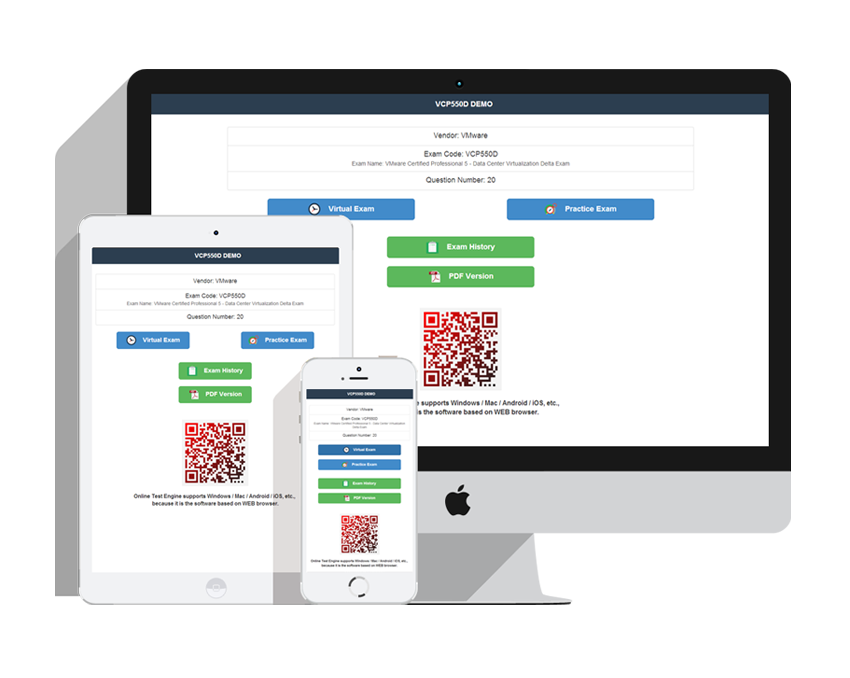
These two versions of CFE-Law test engine have some similar functions: timed test, mark your performance, point out wrong questions and remind you of practicing many times. Soft version of CFE-Law: Certified Fraud Examiner test questions are downloaded and installed in personal computers (Windows operating system and Java environment). APP version of CFE-Law test questions are based on WEB browser, it supports Windows / Mac / Android / iOS etc.
Soft version of CFE-Law: Certified Fraud Examiner test questions can be downloaded in more than 200 personal computers. Once you download software, you use it offline any time. If there is no network, you can copy on another computer. APP version of CFE-Law test questions are downloaded and installed well. It is based on web browser, if you do not close website, you can also use it offline. As to functional performance APP version of ACFE CFE-Law test exam materials may be much stabler than Soft version.
How can you get valid CFE-Law: Certified Fraud Examiner test questions for passing exam? Many candidates are looking for valid test online to pass exam day to day. Here is your chance. Testpassed offers the best high passing rate CFE-Law test online to help candidates pass exam for sure. We are engaged in editing good test questions materials so many years. Our educational experts all have more than 8 years' experience in IT career certifications. Our CFE-Law: Certified Fraud Examiner test questions are edited seriously and strictly. We guarantee our products help most of candidates pass test. If users pay much attention to our ACFE CFE-Law test questions most of users will get good passing score.

Golden service: 7/24 online service support
We support 7/24 online customer service even on large official holiday. No matter when candidates have any problem & advice about CFE-Law: Certified Fraud Examiner test questions materials we are sure to reply and solve with you soon. Service staff performance assess criteria are required that any email and contact about CFE-Law test engine should be handled in two hours.
Golden service: one year service warrant after sale
If you purchase our CFE-Law: Certified Fraud Examiner test questions materials, we guarantee our products are valid for one year. You can download our latest materials free of charge within one year if we release new CFE-Law test questions. If you are ready to purchase test engine, please rest assured that we will serve for ever user within one year before passing test.
ACFE CFE-Law Exam Syllabus Topics:
| Section | Objectives |
|---|---|
| Topic 1: Court Procedures and Testimony | - Expert witness responsibilities - Court structure and litigation process - Trial procedures and testimony standards |
| Topic 2: International Legal Considerations | - Jurisdictional challenges - Cross-border fraud issues |
| Topic 3: Civil Law | - Contract and damages principles - Torts and remedies - Civil liability in fraud cases |
| Topic 4: Legal Rights and Investigation Procedures | - Rights of suspects and subjects - Search and seizure principles - Interview and interrogation legal considerations |
| Topic 5: Criminal Law | - Criminal procedure fundamentals - Prosecution process and defenses - Criminal liability and intent |
| Topic 6: Legal Elements of Fraud | - Types of fraud schemes under law - Definition and elements of fraud |
| Topic 7: Rules of Evidence | - Admissibility of evidence - Chain of custody - Hearsay and exceptions |
ACFE Certified Fraud Examiner Sample Questions:
1. In an inquisitorial judicial proceeding, which of the following parties is primarily responsible for questioning witnesses and generally has a larger role in the evidence-gathering process?
A) The prosecution
B) The judge
C) The defendant ' s counsel
D) The grand jury
2. Which of the following statements concerning judgments involving parties that are in multiple jurisdictions is most accurate?
A) If a party obtains a judgment against a defendant in one jurisdiction, then that judgment might not be effective in other jurisdictions where the defendant resides.
B) Whether a foreign judgment is enforceable is not affected by the law where the judgment is enforced.
C) Whether a foreign judgment is enforceable always depends on where the defendant ' s assets are located.
D) If a party obtains a judgment against a defendant in one jurisdiction, then that judgment is effective automatically and recognized in all jurisdictions throughout the world.
3. Which of the following statements regarding civil lawsuits in most jurisdictions is CORRECT?
A) The plaintiff's initial filing with the court does not typically need to include the specific facts on which the claim relies.
B) The plaintiffs initial filing does not typically need to contain a summary of the evidence
C) Civil lawsuits begin with the filing of a pleading, usually in the jurisdiction in which the defendant resides or where the claim arose
D) All of the above are correct
4. Calvin, an attorney, sends a letter that is protected by a legal professional privilege to Katrina, one of his clients. Upon receiving the letter, Katrina emails it to her coworker who has no need to know the information contained in the letter. Which of the following statements is MOST ACCURATE?
A) The privilege was not waived by Katrina because the legal professional privilege belongs to the attorney, not the client.
B) The privilege might have been waived because Katrina transmitted the protected information to a third party who has no need to know the information.
C) The privilege might have been waived because Katrina used email to transmit the protected information.
D) The privilege was not waived because the legal professional privilege cannot be waived by transmitting protected information to a third party.
5. Which of the following is required for a contract, transaction, or scheme to qualify as an investment contract?
A) The investment must be made in cash.
B) The investment is in a common enterprise.
C) The investment must not have been made with expectations of making a profit.
D) The investment activity is managed solely by the efforts of the investor and no others.
Solutions:
| Question # 1 Answer: B | Question # 2 Answer: A | Question # 3 Answer: C | Question # 4 Answer: B | Question # 5 Answer: B |


 Tina
Tina 
 Alva
Alva 
 Eden
Eden  Colin
Colin 
 Nigel
Nigel  Merry
Merry  Jared
Jared  Simon
Simon  Ophelia
  Joyce
Joyce  Jeff
Jeff  Ken
Ken  Montague
  Zoe
Zoe  Elvis
Elvis  David
David  Boyce
Boyce  Allen
Allen  Omar
Omar