We guarantee that No Pass No Pay
We are confident about our C1000-200: IBM MQ v9.4 Administrator - Professional test questions materials that we can help users pass real test certainly. Our passing rate for IBM Digital Business Automation exam is 99.69%. Most candidates will clear exam successfully. We make sure that if you fail exam sadly we will full refund to you unconditionally. If candidates send us your unqualified score scanned, we will refund to you directly. Please trust our C1000-200: IBM MQ v9.4 Administrator - Professional test questions. If you choose us, we will help you success surely.
After purchase, Instant Download: Upon successful payment, Our systems will automatically send the product you have purchased to your mailbox by email. (If not received within 12 hours, please contact us. Note: don't forget to check your spam.)
Golden service: 7/24 online service support
We support 7/24 online customer service even on large official holiday. No matter when candidates have any problem & advice about C1000-200: IBM MQ v9.4 Administrator - Professional test questions materials we are sure to reply and solve with you soon. Service staff performance assess criteria are required that any email and contact about C1000-200 test engine should be handled in two hours.
Three versions of excellent products: PDF version, Soft version, APP version
We release three versions of C1000-200: IBM MQ v9.4 Administrator - Professional test questions materials. Different kinds of products satisfy different demands of people. If you like writing and reading on paper, PDF version of C1000-200 test questions are suitable for you. If you like studying on computer you can choose soft version or/and APP version.
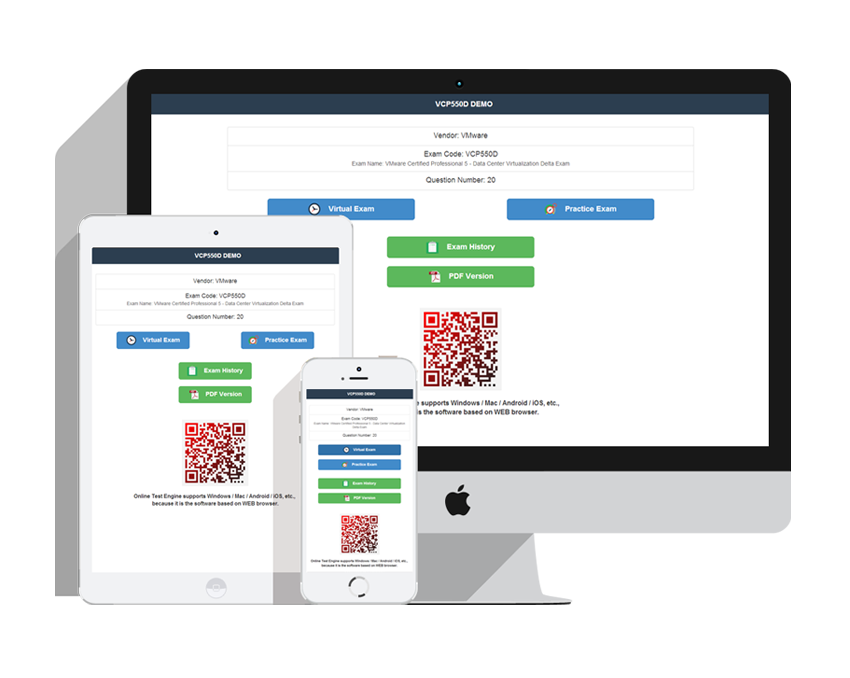
These two versions of C1000-200 test engine have some similar functions: timed test, mark your performance, point out wrong questions and remind you of practicing many times. Soft version of C1000-200: IBM MQ v9.4 Administrator - Professional test questions are downloaded and installed in personal computers (Windows operating system and Java environment). APP version of C1000-200 test questions are based on WEB browser, it supports Windows / Mac / Android / iOS etc.
Soft version of C1000-200: IBM MQ v9.4 Administrator - Professional test questions can be downloaded in more than 200 personal computers. Once you download software, you use it offline any time. If there is no network, you can copy on another computer. APP version of C1000-200 test questions are downloaded and installed well. It is based on web browser, if you do not close website, you can also use it offline. As to functional performance APP version of IBM C1000-200 test exam materials may be much stabler than Soft version.
How can you get valid C1000-200: IBM MQ v9.4 Administrator - Professional test questions for passing exam? Many candidates are looking for valid test online to pass exam day to day. Here is your chance. Testpassed offers the best high passing rate C1000-200 test online to help candidates pass exam for sure. We are engaged in editing good test questions materials so many years. Our educational experts all have more than 8 years' experience in IT career certifications. Our C1000-200: IBM MQ v9.4 Administrator - Professional test questions are edited seriously and strictly. We guarantee our products help most of candidates pass test. If users pay much attention to our IBM C1000-200 test questions most of users will get good passing score.

Golden service: one year service warrant after sale
If you purchase our C1000-200: IBM MQ v9.4 Administrator - Professional test questions materials, we guarantee our products are valid for one year. You can download our latest materials free of charge within one year if we release new C1000-200 test questions. If you are ready to purchase test engine, please rest assured that we will serve for ever user within one year before passing test.
IBM C1000-200 Exam Syllabus Topics:
| Section | Objectives |
|---|---|
| Queue and Channel Management | - Local, remote, and model queues - Channel types and configuration |
| Installation and Configuration | - Queue manager setup and configuration - Client and server configuration |
| Backup and Recovery | - Disaster recovery procedures - Queue manager backup strategies |
| Clustering and High Availability | - IBM MQ clustering concepts - HA configurations and workload balancing |
| IBM MQ Architecture and Concepts | - IBM MQ components and architecture overview - Messaging fundamentals (queues, topics, pub/sub) |
| Security | - Authentication and authorization (OAM, LDAP integration) - TLS/SSL configuration |
| Performance and Tuning | - Queue manager performance optimization - Throughput and latency tuning |
| Monitoring and Troubleshooting | - Problem determination techniques - Error logs and event monitoring |
IBM MQ v9.4 Administrator - Professional Sample Questions:
Question 1
When integrating IBM MQ with external transactional systems, which explanation correctly describes the use of XA (Extended Architecture) transactions, including how MQ coordinates with databases or ERP systems to ensure that all operations within a distributed transaction either commit or rollback as a single unit to maintain ACID compliance?
A. XA transactions are automatically applied without configuration
B. XA transactions are optional and have no impact on reliability
C. XA transactions allow MQ to participate in distributed transactions with external systems, ensuring atomicity, consistency, isolation, and durability across all resources involved
D. XA transactions only affect message storage within MQ and do not coordinate with external systems
Question 2
In a logistics company, several microservices consume order messages from an IBM MQ queue. If one of the consumer services fails to process a message repeatedly due to application errors, administrators want the message to be moved automatically to a holding area for later inspection. Which IBM MQ feature addresses this requirement?
A. Segmentation and reassembly
B. Message grouping for ordered delivery
C. Temporary dynamic queue
D. Backout queue with backout threshold
Question 3
In IBM MQ, application programs can connect to a queue manager using client or bindings mode. What is the difference between these two connection modes in terms of resource utilization, security, and message throughput, and why might an enterprise choose one mode over the other for high-performance environments?
A. Client mode encrypts all messages automatically, whereas bindings mode does not support encryption
B. Client mode stores all messages locally before delivery, while bindings mode sends messages directly to remote queues
C. Bindings mode allows multiple queue managers to connect automatically, while client mode does not
D. Client mode connects over the network using SVRCONN channels, providing flexibility but slightly higher network latency, while bindings mode runs within the same system as the queue manager, offering higher throughput and lower latency
Question 4
Which of the following best describes the role of a Queue Manager in IBM MQ, including its responsibilities for handling message storage, retrieval, and ensuring reliable delivery across different applications?
A. The central component responsible for managing queues, message routing, and ensuring reliable message delivery
B. A utility that converts messages from one format to another
C. A process that only monitors network traffic between applications
D. A storage facility that only stores messages temporarily without managing delivery
Question 5
During a disaster recovery drill, a financial institution must prove that its IBM MQ infrastructure can continue processing without interruption if the primary data center becomes unavailable. Which IBM MQ deployment option provides replication of data and automatic failover capabilities across geographically dispersed sites?
A. Dead-letter queue forwarding
B. Asynchronous consumer applications
C. Publish/subscribe replication
D. Replicated Data Queue Manager (RDQM) in disaster recovery mode
Solutions:
| Question 1 Answer: C | Question 2 Answer: D | Question 3 Answer: D | Question 4 Answer: A | Question 5 Answer: D |


 Fabian
 Regan
Regan 
 Meredith
 Sophia
  Bradley
  Stacey
  Matthew
  Nathan
  Gregary
  Adolph
  Kelly
Kelly  Vic
Vic  Harlan
  Mandel