Three versions of excellent products: PDF version, Soft version, APP version
We release three versions of DP-750: Implementing Data Engineering Solutions Using Azure Databricks test questions materials. Different kinds of products satisfy different demands of people. If you like writing and reading on paper, PDF version of DP-750 test questions are suitable for you. If you like studying on computer you can choose soft version or/and APP version.
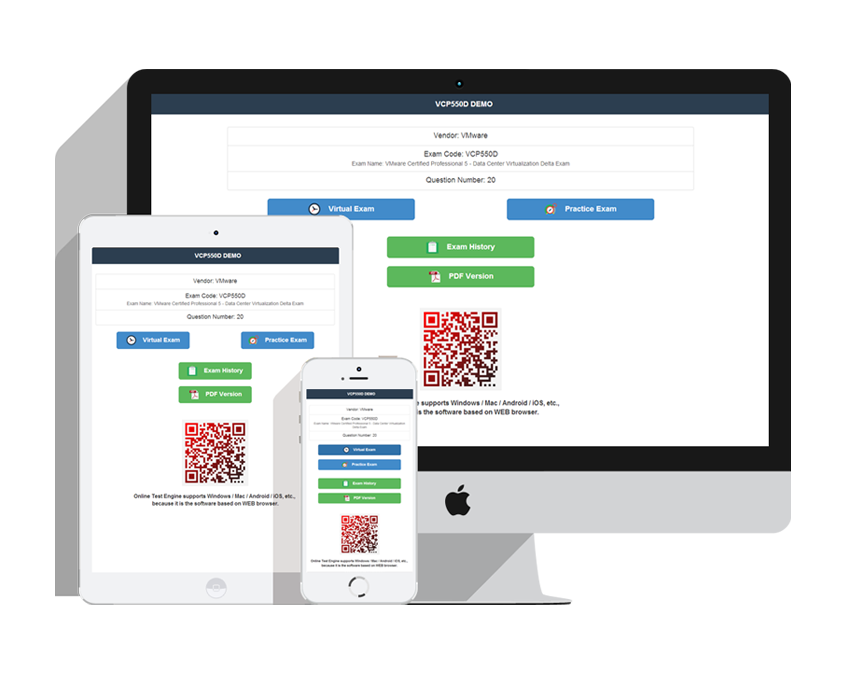
These two versions of DP-750 test engine have some similar functions: timed test, mark your performance, point out wrong questions and remind you of practicing many times. Soft version of DP-750: Implementing Data Engineering Solutions Using Azure Databricks test questions are downloaded and installed in personal computers (Windows operating system and Java environment). APP version of DP-750 test questions are based on WEB browser, it supports Windows / Mac / Android / iOS etc.
Soft version of DP-750: Implementing Data Engineering Solutions Using Azure Databricks test questions can be downloaded in more than 200 personal computers. Once you download software, you use it offline any time. If there is no network, you can copy on another computer. APP version of DP-750 test questions are downloaded and installed well. It is based on web browser, if you do not close website, you can also use it offline. As to functional performance APP version of Microsoft DP-750 test exam materials may be much stabler than Soft version.
How can you get valid DP-750: Implementing Data Engineering Solutions Using Azure Databricks test questions for passing exam? Many candidates are looking for valid test online to pass exam day to day. Here is your chance. Testpassed offers the best high passing rate DP-750 test online to help candidates pass exam for sure. We are engaged in editing good test questions materials so many years. Our educational experts all have more than 8 years' experience in IT career certifications. Our DP-750: Implementing Data Engineering Solutions Using Azure Databricks test questions are edited seriously and strictly. We guarantee our products help most of candidates pass test. If users pay much attention to our Microsoft DP-750 test questions most of users will get good passing score.

Golden service: 7/24 online service support
We support 7/24 online customer service even on large official holiday. No matter when candidates have any problem & advice about DP-750: Implementing Data Engineering Solutions Using Azure Databricks test questions materials we are sure to reply and solve with you soon. Service staff performance assess criteria are required that any email and contact about DP-750 test engine should be handled in two hours.
We guarantee that No Pass No Pay
We are confident about our DP-750: Implementing Data Engineering Solutions Using Azure Databricks test questions materials that we can help users pass real test certainly. Our passing rate for Microsoft Microsoft Certified: Fabric Data Engineer Associate exam is 99.69%. Most candidates will clear exam successfully. We make sure that if you fail exam sadly we will full refund to you unconditionally. If candidates send us your unqualified score scanned, we will refund to you directly. Please trust our DP-750: Implementing Data Engineering Solutions Using Azure Databricks test questions. If you choose us, we will help you success surely.
After purchase, Instant Download: Upon successful payment, Our systems will automatically send the product you have purchased to your mailbox by email. (If not received within 12 hours, please contact us. Note: don't forget to check your spam.)
Golden service: one year service warrant after sale
If you purchase our DP-750: Implementing Data Engineering Solutions Using Azure Databricks test questions materials, we guarantee our products are valid for one year. You can download our latest materials free of charge within one year if we release new DP-750 test questions. If you are ready to purchase test engine, please rest assured that we will serve for ever user within one year before passing test.
Microsoft DP-750 Exam Syllabus Topics:
| Section | Weight | Objectives |
|---|---|---|
| Topic 1: Secure and govern Unity Catalog objects | 15-20% | - Implement governance and security
|
| Topic 2: Prepare and process data | 30-35% | - Ingest and transform data
|
| Topic 3: Deploy and maintain data pipelines and workloads | 30-35% | - Manage production workloads
|
| Topic 4: Set up and configure an Azure Databricks environment | 15-20% | - Create and configure Azure Databricks workspaces
|
Microsoft Implementing Data Engineering Solutions Using Azure Databricks Sample Questions:
You use Databricks Asset Bundles to manage two jobs and an app.
You need to deploy the bundle to development and production environments. The solution must meet the following requirements
* Deploy the app to both environments.
* Deploy only one job to development.
* Minimize administrative effort.
What should you use?
- A. a variables node in a databricks.yml file
- B. separate databricks.yml files for each environment
- C. a resources node in a databricks.yml file
- D. a targets node in a databricks.yml file
Correct Answer: D 🗳️
Explanation: Only visible for TestPassed members. You can sign-up / login (it's free).
You have an Azure Databricks workspace that is enabled for Unity Catalog and contains a catalog named Catalog 1. Catalog 1 contains a table named Transactions. Transactions contains the following columns:
* transaction_id
* customet_name
* email address
* credit_card_number
* transaction_amount
You need to ensure that business analysts can query all the tows in the Transactions table. The solution must meet the following requirements:
* Prevent the analysts from seeing the full values in the email_address and credit_catd_number columns.
* Ensure that the analysts can see only the values after the @ character in each email address.
* Ensure that the analysts can see only the last four digits of each credit card number.
* Enable the analysts to query the table without errors.
* Follow the principle of least privilege.
What should you do?
- A. Grant the analysts the select permission for the Transactions table and apply column-level encryption
- B. Grant the analysts the select permission for columns that do NOT contain sensitive data.
- C. Grant the analysts the SELECT permission for the Transactions table and implement row-level filters.
- D. Grant the analysts the select permission for the Transactions table and apply column masks to email_address and credit_card_number
Correct Answer: D 🗳️
Explanation: Only visible for TestPassed members. You can sign-up / login (it's free).
You have an Azure Databricks workspace that uses Unity Catalog.
You have a Lakeflow Spark Declarative Pipelines (SDP) pipeline that ingests data into a managed Delta table named Table1. Table1 is used for analytics.
New columns are added to the source data, causing pipeline failures during writes to Table1.
You need to prevent the pipeline failures. The solution must ensure that schema changes are detected and handled.
What should you do?
- A. Create a separate table for each schema version.
- B. Disable schema enforcement for Table1.
- C. Enable schema evolution.
- D. Use row filters to exclude records that have new columns.
Correct Answer: C 🗳️
Explanation: Only visible for TestPassed members. You can sign-up / login (it's free).
You have an Azure Databricks workspace.
A vendor sends order events to an Azure event hub continuously throughout the day. The events must be ingested with low latency into an orders Delta table as they are received.
You create a job in Lakeflow Jobs named Job1 to ingest data from the event hub stream.
You need to configure a trigger for Job1.
Which type of trigger should you use?
- A. Table update
- B. Continuous
- C. Scheduled
- D. File arrival
Correct Answer: B 🗳️
Explanation: Only visible for TestPassed members. You can sign-up / login (it's free).
You have an Azure Databricks workspace that is enabled for Unity Catalog and contains a Delta table named Orders.
You load the Orders table into an Apache Spark DataFrame named df.
You need to create a DataFrame that excludes rows where the order amount is null.
Solution: You run the following expression.
df.filter(df.order_amount != None)
Does this meet the goal?
- A. Yes
- B. No
Correct Answer: B 🗳️
Explanation: Only visible for TestPassed members. You can sign-up / login (it's free).
Viewing page 1 out of 22 pages.
Viewing questions 1-5 out of 110 questions.


 Gavin

 Jenny

 Samuel
 Ken
 Yves
 Jim
 Bruce
 Hogan

 Hiram
 Esther
 Faithe
 Polly
 Marina
 Maggie