Golden service: 7/24 online service support
We support 7/24 online customer service even on large official holiday. No matter when candidates have any problem & advice about NetSec-Architect: Palo Alto Networks Network Security Architect test questions materials we are sure to reply and solve with you soon. Service staff performance assess criteria are required that any email and contact about NetSec-Architect test engine should be handled in two hours.
Golden service: one year service warrant after sale
If you purchase our NetSec-Architect: Palo Alto Networks Network Security Architect test questions materials, we guarantee our products are valid for one year. You can download our latest materials free of charge within one year if we release new NetSec-Architect test questions. If you are ready to purchase test engine, please rest assured that we will serve for ever user within one year before passing test.
How can you get valid NetSec-Architect: Palo Alto Networks Network Security Architect test questions for passing exam? Many candidates are looking for valid test online to pass exam day to day. Here is your chance. Testpassed offers the best high passing rate NetSec-Architect test online to help candidates pass exam for sure. We are engaged in editing good test questions materials so many years. Our educational experts all have more than 8 years' experience in IT career certifications. Our NetSec-Architect: Palo Alto Networks Network Security Architect test questions are edited seriously and strictly. We guarantee our products help most of candidates pass test. If users pay much attention to our Palo Alto Networks NetSec-Architect test questions most of users will get good passing score.

Three versions of excellent products: PDF version, Soft version, APP version
We release three versions of NetSec-Architect: Palo Alto Networks Network Security Architect test questions materials. Different kinds of products satisfy different demands of people. If you like writing and reading on paper, PDF version of NetSec-Architect test questions are suitable for you. If you like studying on computer you can choose soft version or/and APP version.
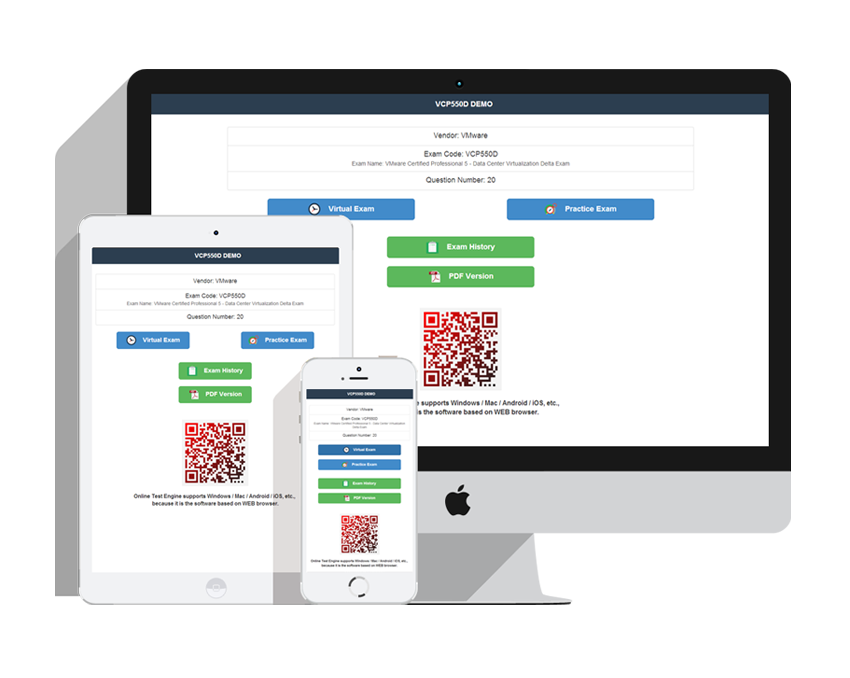
These two versions of NetSec-Architect test engine have some similar functions: timed test, mark your performance, point out wrong questions and remind you of practicing many times. Soft version of NetSec-Architect: Palo Alto Networks Network Security Architect test questions are downloaded and installed in personal computers (Windows operating system and Java environment). APP version of NetSec-Architect test questions are based on WEB browser, it supports Windows / Mac / Android / iOS etc.
Soft version of NetSec-Architect: Palo Alto Networks Network Security Architect test questions can be downloaded in more than 200 personal computers. Once you download software, you use it offline any time. If there is no network, you can copy on another computer. APP version of NetSec-Architect test questions are downloaded and installed well. It is based on web browser, if you do not close website, you can also use it offline. As to functional performance APP version of Palo Alto Networks NetSec-Architect test exam materials may be much stabler than Soft version.
We guarantee that No Pass No Pay
We are confident about our NetSec-Architect: Palo Alto Networks Network Security Architect test questions materials that we can help users pass real test certainly. Our passing rate for Palo Alto Networks Network Security Generalist exam is 99.69%. Most candidates will clear exam successfully. We make sure that if you fail exam sadly we will full refund to you unconditionally. If candidates send us your unqualified score scanned, we will refund to you directly. Please trust our NetSec-Architect: Palo Alto Networks Network Security Architect test questions. If you choose us, we will help you success surely.
After purchase, Instant Download: Upon successful payment, Our systems will automatically send the product you have purchased to your mailbox by email. (If not received within 12 hours, please contact us. Note: don't forget to check your spam.)
Palo Alto Networks NetSec-Architect Exam Syllabus Topics:
| Section | Objectives |
|---|---|
| Topic 1: Network Security Architecture Principles | - Security architecture frameworks and design principles - Zero Trust architecture concepts - Risk assessment and security requirements mapping |
| Topic 2: Automation and Integration | - Integration with SIEM and SOAR platforms - API-based automation and orchestration - Infrastructure as Code security integration |
| Topic 3: Cloud Security Architecture | - Cloud network security design (AWS, Azure, GCP) - Prisma Cloud security architecture concepts - Container and workload protection architecture |
| Topic 4: Palo Alto Networks Platform Architecture | - Logging, monitoring, and visibility architecture - Next-Generation Firewall (NGFW) architecture and capabilities - Panorama centralized management design |
| Topic 5: SASE and Secure Access Design | - Prisma Access architecture - SD-WAN integration and design considerations - Remote access security architecture |
| Topic 6: Threat Prevention and Security Services | - Decryption and SSL inspection architecture - Threat prevention design (IPS, anti-malware, URL filtering) - Application identification and policy enforcement |
Palo Alto Networks Network Security Architect Sample Questions:
Question 1
An organization has selected Prisma SD-WAN ION devices for use at branch offices and is working to build a low-level design for its sites. A typical branch site has a 10 Mbps MPLS with fiber LC-SR, and an RJ-45 Ethernet 50 Mbps DIA internet circuit.
There are 75 workstations and a stacked core switch that supports LACP, M-LAG, BGP, and OSPF will be used. The core switch is the default gateway for all local VLANs. The final design will determine the selection of the appropriate model and accessories for the site.
Which statement applies to the Prisma SD-WAN architecture in this use case?
A. High availability (HA) for the LAN side connectivity can at most support two interfaces using LAG / LACP
B. Connectivity over the MPLS will be lost when the device that terminates it loses power
C. MPLS underlay paths cannot be used as an active path alongside internet overlay path
D. Only a default route can be advertised on a LAN-side BGP peering from the ION
Question 2
A global organization is in the process of securing critical applications during a cloud-based migration while migrating to a cloud-first design, and it is currently performing a brownfield migration of its most critical applications - such as CRM and product intellectual property / design systems - into Azure Cloud. The organization already has an active/passive high availability (HA) NGFW deployed at its data center with multiple zones and has replicated that design into its existing Azure HA deployment.
The organization recognizes the need to modernize its security posture as critical workloads move out of the data center and users connect from anywhere. Its security model is defined by a traditional "hard shell, soft center" approach:
Zero Trust Gaps
- Current network segmentation is perimeter-based. The organization wants to expand Zero Trust principles across cloud and on-premises environments.
- The network relies heavily on VLANs and IP address-based Access Control Lists (ACLs) segmented primarily by office location and broad departmental groups.
- Once employees are on the corporate network (i.e., inside the "perimeter"), they have relatively wide access.
- If attackers compromise a single endpoint (e.g., via a phishing email), they can easily move laterally and scan for high-value targets.
Cloud Blind Spots
- The organization uses Azure for its production environments and hosts applications that contain sensitive customer data.
- Security controls in the cloud are often managed independently of the on-premises network.
Access is frequently granted with overly permissive identity and access management (IAM) roles and keys based on the resource rather than the user's real-time context or application health.
Remote User Access
- Many remote users are still hairpinning into the corporate data center just to reach internet or SaaS resources, creating latency and inefficiency.
- Traditional VPN is used for remote employees.
- The VPN grants access to the entire internal network segment making the remote endpoint the new, weaker perimeter. There is no continuous check on the user's device health after the initial connection.
Visibility and Logging
- Logs are primarily stored on-premises, then forwarded to a local Security Information and Event Management (SIEM) solution. As applications move to Azure, visibility into cloud traffic and user behavior becomes fragmented.
Data Security Concern
- Sensitive data, including product design files, will now live in SaaS and cloud environments. The organization needs data security to prevent leakage and enforce compliance.
Ingress Security
- Third-party partners and suppliers require access into the data center and cloud applications, introducing risk at ingress points.
The organization needs to ensure data security and prevent the leakage of sensitive product design files since it is migrating to SaaS and cloud environments.
How would implementing a Next-Generation CASB (CASB-X) capability address the concerns in the scenario?
A. By replacing the reliance on VLANs and IP address-based Access Control Lists (ACLs) by enforcing a user-to-application microsegmentation policy based on identity
B. By providing data loss prevention (DLP) features to scan data-at-rest and data-in-transit in sanctioned SaaS and cloud applications
C. By continuously monitoring user behavior and device health from a central control point to prevent lateral movement if an attacker compromises an endpoint
D. By applying URL filtering and malware prevention to all traffic destined for unsanctioned or risky cloud applications, reducing the attack surface
Question 3
A global manufacturing organization has a strategic plan for rapid growth through mergers and acquisitions Several components the organization has purchased are deemed large deployments with existing IP address schemas and allocations that conflict with the parent organization. The manufacturing organization needs access to the resources before a re-IP initiative can be completed.
All of the deployments include a variety of IoT devices Leadership requires protection of vulnerable assets and identification of any known CVEs associated with the IoT devices. The governance, risk and compliance (GRC) team requires comprehensive non-repudiable logs to identify all IoT devices reporting "Critical (9 0+) CVE scores" for mandatory remediation.
Throughput needs to exceed the current 1 Gbps trending rate, and with expected growth will soon scale to 5 Gbps.
Segmentation is a mandatory requirement with enclaves based on region, device type, and function.
A firewall has been configured in tap mode for visibility into the traffic for profiling Inconsistencies in the profiling have been observed with a mix of behaviors.
What are two possible root causes for the behavior? (Choose two.)
A. Hard coded MAC addresses cannot be properly profiled
B. Asymmetric routing is providing visibility into TX but not RX traffic
C. The devices are deployed behind a NAT device
D. MAC spoofing is occurring on the network
Question 4
An organization plans to deploy a full SASE architecture consisting of Prisma SD-WAN IONs at branches and data centers alongside Prisma Access remote networks, service connections, and mobile users. The business office team requires that traffic from global remote offices to public cloud is of highest criticality, and this traffic should have the greatest service-level agreement (SLA) and QoS priority while still maintaining a balance of threat inspection. Which recommendation should the architect make to provide the lowest latency, highest throughput, and greatest resilience for the applications?
A. Prisma Access remote networks with service connections directly to the cloud environment using IPSec and either static or dynamic routing
B. Prisma Access Agent or a PAC file explicit proxy configuration connecting the end user devices directly to Prisma Access with a service connection to the public cloud provider
C. Prisma SD-WAN IONs deployed within the cloud environment using BGP-to-peer to the internal route tables of the application
D. Prisma SD-WAN ION deployed at both branch and private data center with a direct private link between the private data center and the public cloud provider
Question 5
A company wants visibility into all traffic, including unknown applications. What feature enables this?
A. QoS
B. App-ID
C. Routing
D. NAT
Solutions:
| Question 1 Answer: B | Question 2 Answer: B | Question 3 Answer: B,C | Question 4 Answer: C | Question 5 Answer: B |


 Jo
Jo 
 Athena
 Josephine
  Ruby
Ruby  Alexia
  Miles
Miles  Bonnie
  Meroy
Meroy  Yvette
 Dominic
  Penny
Penny  Stanford
  Morton
  Franklin
  Malcolm
  Luther