Certification Path
Salesforce Marketing Cloud Email Specialist Certification can act as a prerequisite for this exam.
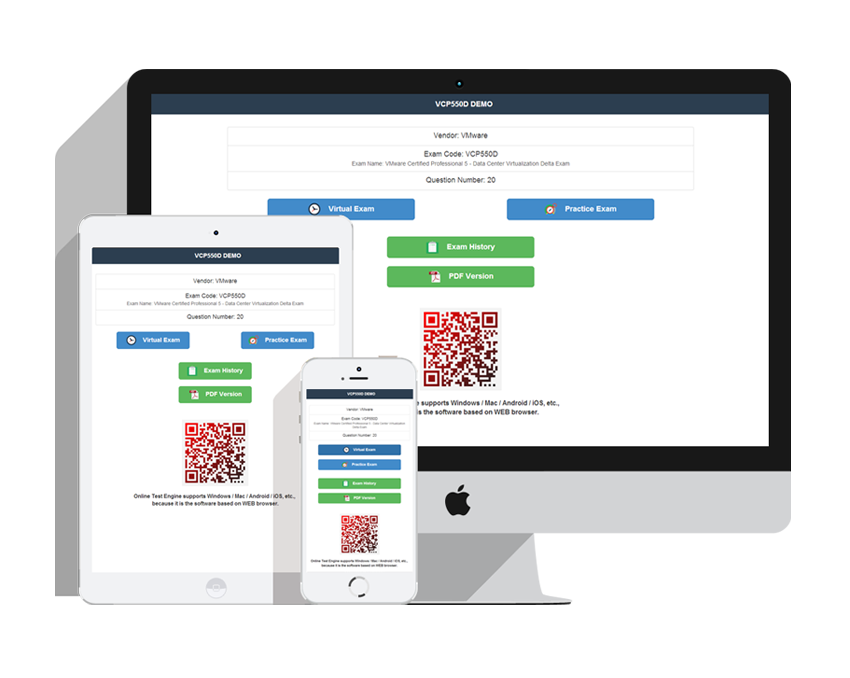
Three versions of excellent products: PDF version, Soft version, APP version
We release three versions of Marketing-Cloud-Consultant: Salesforce Certified Marketing Cloud Consultant test questions materials. Different kinds of products satisfy different demands of people. If you like writing and reading on paper, PDF version of Marketing-Cloud-Consultant test questions are suitable for you. If you like studying on computer you can choose soft version or/and APP version.
These two versions of Marketing-Cloud-Consultant test engine have some similar functions: timed test, mark your performance, point out wrong questions and remind you of practicing many times. Soft version of Marketing-Cloud-Consultant: Salesforce Certified Marketing Cloud Consultant test questions are downloaded and installed in personal computers (Windows operating system and Java environment). APP version of Marketing-Cloud-Consultant test questions are based on WEB browser, it supports Windows / Mac / Android / iOS etc.
Soft version of Marketing-Cloud-Consultant: Salesforce Certified Marketing Cloud Consultant test questions can be downloaded in more than 200 personal computers. Once you download software, you use it offline any time. If there is no network, you can copy on another computer. APP version of Marketing-Cloud-Consultant test questions are downloaded and installed well. It is based on web browser, if you do not close website, you can also use it offline. As to functional performance APP version of Salesforce Marketing-Cloud-Consultant test exam materials may be much stabler than Soft version.
Marketing-Cloud-Consultant Exam topics
Candidates must know the exam topics before they start of preparation. Because it will really help them in hitting the core. Our Salesforce Marketing-Cloud-Consultant exam dumps will include the following topics:
1. Discovery: 15%
- Given a solution, recommend the appropriate customer skill sets required to utilize the Marketing Cloud application.
- Provided with a set of business requirements, determine what additional information is needed to design the recommended solution.
- Demonstrate how to gather requirements in order to put together the data and segmentation strategy for the customer (for example; frequency, complexity, volume of sending).
- Provided a customer environment and goals, determine the viability of external systems that need to be - included in the solution (for example; POS, CRM, eCommerce, data warehouse, data source inputs).
- Provided with a list of branding and creative strategies, probe for additional information that is needed to recommend an appropriate solution.
- Given a scenario that includes customer information about subscriber acquisition, management, and attrition,utilize this information to select solution components.
2. Conceptual Design: 12%
- Analyze customer data to determine the appropriate data model (for example; List model, Data Extensions .
- Explain the purpose of IP Warming and make a recommendation based on customer needs.
- Given a customer scenario, identify which User Stories are appropriate to use for accessing Marketing Cloud.
- Given a customer scenario, determine the factors to consider when scaling the solution.
- Given a scenario, determine the appropriate solution for given requirements considering technical expertise of personas (for example; Automation Studio vs. Journey Builder).
- Given a narrative data flow, select the correct data flow diagram that depicts that data flow.
- Articulate how data construct will drive one-to-one messaging and content.
3. Marketing Cloud Connect: 6%
- Understand how to send an email to a contact, lead, campaign, and report via the Sales/Service Cloud and - Marketing Cloud (for example; sending, triggered, automated).
- Understand how Sales/Service Cloud data in the Marketing Cloud can be segmented.
- Understand the prerequisites to consider prior to starting a Marketing Cloud Connect configuration (for - example; Salesforce edition, list of integration users, scope user, administrator credentials).
4. Account Configuration: 10%
- Analyze the impact of applying a Sender Authentication Package (SAP) to a business unit (for example; link wrapping, Landing Pages, image URLs).
- Given a customer scenario, recommend the appropriate Marketing Cloud role based on User Stories.
- Determine which type of customer scenario warrants the creation of a business unit (for example; publication - types, demographic, workflow processes, and organizational structure).
- Given a scenario, troubleshoot issues regarding Reply Mail Management.
5. Reporting: 5%
- Summarize Send Logs, including when/why to use it and how to create and manage.
- Compare and contrast standard reports, data views, and tracking extracts.
- Explain how the information in data views and tracking extracts are accessed.
6. Data Design: 12%
- Understand available data types, retention, and template options when building a data extension.
- Understand the implications of a system being database of record.
- Given a customer scenario, recommend the appropriate import method with lists or data extensions.
- Explain the various data objects in the Marketing Cloud (for example; data extensions, list model, data retention model, publication lists, suppression lists).
- Understand how data is retrieved within a Relational Data Model (for example; basic SQL).
7. Automation: 8%
- Given a customer scenario, select the appropriate workflow that meets the business requirement (for example; import, segmentation, email send).
- Compare and contrast triggered and scheduled interactions.
8. Email Build: 7%
- Compare and contrast the ways to individualize content, such as SSJS vs. AMPscript, Dynamic Content Wizard vs. AMPscript/LookupRows function.
- Explain the various ways to individualize email content (for example; AMPscript, personalization strings, Dynamic Content, Guide Template Language).
- Understand the required steps to build, test, and deploy an email based on customer requirements.
- Explain various Marketing Cloud Email technologies (for example; Link Alias tags, Impression regions, Web Analytics Connector).
9. Contact Builder: 15%
- Given a customer scenario, know how to build an Attribute Group to be used for a simple interaction.
- Explain the role and capabilities within Contact Builder.
- Understand how cardinality impacts data modeling.
- Summarize how to use Data Designer to incorporate data source into Contact Builder.
10. Journey Builder: 10%
- Compare and contrast automation tools, such as Journey Builder and Automation Studio.
- Given a customer scenario that includes Journey Builder, evaluate the requirements, activities, and steps.
- Explain the requirements for and the methods by which a contact can enter a Journey.
Golden service: one year service warrant after sale
If you purchase our Marketing-Cloud-Consultant: Salesforce Certified Marketing Cloud Consultant test questions materials, we guarantee our products are valid for one year. You can download our latest materials free of charge within one year if we release new Marketing-Cloud-Consultant test questions. If you are ready to purchase test engine, please rest assured that we will serve for ever user within one year before passing test.
How can you get valid Marketing-Cloud-Consultant: Salesforce Certified Marketing Cloud Consultant test questions for passing exam? Many candidates are looking for valid test online to pass exam day to day. Here is your chance. Testpassed offers the best high passing rate Marketing-Cloud-Consultant test online to help candidates pass exam for sure. We are engaged in editing good test questions materials so many years. Our educational experts all have more than 8 years' experience in IT career certifications. Our Marketing-Cloud-Consultant: Salesforce Certified Marketing Cloud Consultant test questions are edited seriously and strictly. We guarantee our products help most of candidates pass test. If users pay much attention to our Salesforce Marketing-Cloud-Consultant test questions most of users will get good passing score.

We guarantee that No Pass No Pay
We are confident about our Marketing-Cloud-Consultant: Salesforce Certified Marketing Cloud Consultant test questions materials that we can help users pass real test certainly. Our passing rate for Salesforce Salesforce Marketing Cloud Consultant exam is 99.69%. Most candidates will clear exam successfully. We make sure that if you fail exam sadly we will full refund to you unconditionally. If candidates send us your unqualified score scanned, we will refund to you directly. Please trust our Marketing-Cloud-Consultant: Salesforce Certified Marketing Cloud Consultant test questions. If you choose us, we will help you success surely.
After purchase, Instant Download: Upon successful payment, Our systems will automatically send the product you have purchased to your mailbox by email. (If not received within 12 hours, please contact us. Note: don't forget to check your spam.)
Golden service: 7/24 online service support
We support 7/24 online customer service even on large official holiday. No matter when candidates have any problem & advice about Marketing-Cloud-Consultant: Salesforce Certified Marketing Cloud Consultant test questions materials we are sure to reply and solve with you soon. Service staff performance assess criteria are required that any email and contact about Marketing-Cloud-Consultant test engine should be handled in two hours.
How much Marketing-Cloud-Consultant Exam Cost
The price of the Marketing-Cloud-Consultant exam is 200 USD and retake exam fees is 100 USD plus applicable taxes.
Reference: https://trailheadacademy.salesforce.com/certificate/exam-mce-consultant---MCE-Con-201
Salesforce Marketing-Cloud-Consultant Exam Syllabus Topics:
| Section | Weight | Objectives |
|---|---|---|
| Automation | 20% | - Journey Builder design and implementation - Scheduling and monitoring automations - Automation Studio activities and workflows - Complex automation scenarios and best practices |
| Data Modeling and Management | 21% | - Data import, export and transformation - Data extensions, attribute groups and relationships - Reporting, tracking and data views - Contact configuration and identity management |
| Account Configuration | 12% | - Mobile Studio configuration and features - Sender authentication and deliverability management - User roles, permissions and security settings - Account hierarchy and business unit setup |
| Integration | 20% | - Integration with Salesforce CRM and external systems - Marketing Cloud Connect configuration and troubleshooting - Data model support for personalized messaging - Extension products and integration solutions |
| Messaging | 11% | - Cross-channel messaging strategy - Content personalization and dynamic content - Message delivery and optimization - Email, SMS and push message design |
| Discovery and Architecture | 16% | - Data and segmentation strategy design - Long-term solution maintainability and scalability - Solution design and architecture planning - Requirements gathering and analysis |


 Ford
Ford 
 King
King  Solomon
  Edward
 Lisa
Lisa 
 Laura
Laura  Nina
Nina  Ernest
  Bancroft
  Clyde
Clyde  Xavier
  Berton
  Corey
Corey  Geoff
Geoff  Kim
Kim  Bancroft
  Reginald