How can you get valid 1Z0-858: Java Enterprise Edition 5 Web Component Developer Certified Professional Exam test questions for passing exam? Many candidates are looking for valid test online to pass exam day to day. Here is your chance. Testpassed offers the best high passing rate 1Z0-858 test online to help candidates pass exam for sure. We are engaged in editing good test questions materials so many years. Our educational experts all have more than 8 years' experience in IT career certifications. Our 1Z0-858: Java Enterprise Edition 5 Web Component Developer Certified Professional Exam test questions are edited seriously and strictly. We guarantee our products help most of candidates pass test. If users pay much attention to our Oracle 1Z0-858 test questions most of users will get good passing score.

We guarantee that No Pass No Pay
We are confident about our 1Z0-858: Java Enterprise Edition 5 Web Component Developer Certified Professional Exam test questions materials that we can help users pass real test certainly. Our passing rate for Oracle Java Technology exam is 99.69%. Most candidates will clear exam successfully. We make sure that if you fail exam sadly we will full refund to you unconditionally. If candidates send us your unqualified score scanned, we will refund to you directly. Please trust our 1Z0-858: Java Enterprise Edition 5 Web Component Developer Certified Professional Exam test questions. If you choose us, we will help you success surely.
After purchase, Instant Download: Upon successful payment, Our systems will automatically send the product you have purchased to your mailbox by email. (If not received within 12 hours, please contact us. Note: don't forget to check your spam.)
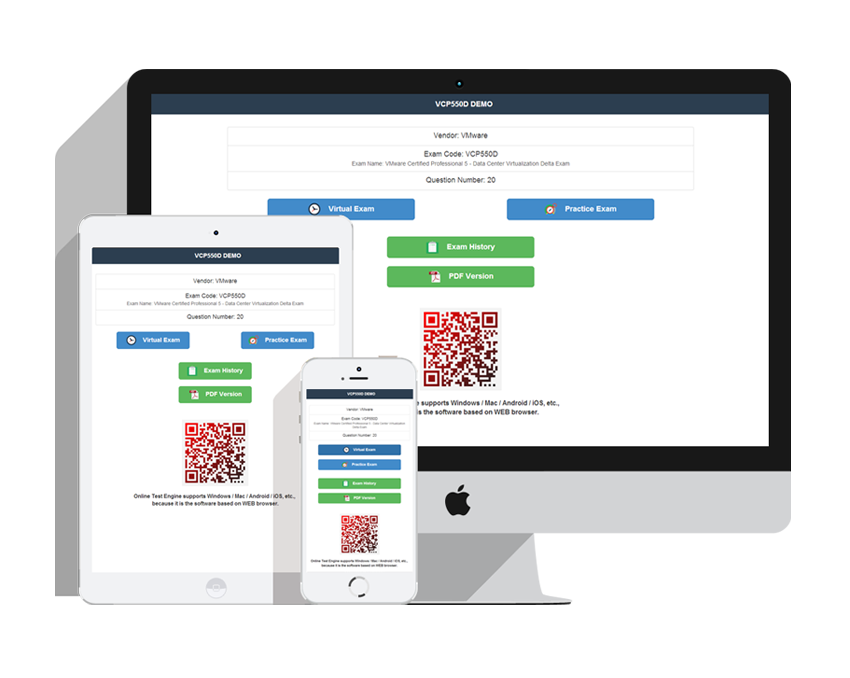
Three versions of excellent products: PDF version, Soft version, APP version
We release three versions of 1Z0-858: Java Enterprise Edition 5 Web Component Developer Certified Professional Exam test questions materials. Different kinds of products satisfy different demands of people. If you like writing and reading on paper, PDF version of 1Z0-858 test questions are suitable for you. If you like studying on computer you can choose soft version or/and APP version.
These two versions of 1Z0-858 test engine have some similar functions: timed test, mark your performance, point out wrong questions and remind you of practicing many times. Soft version of 1Z0-858: Java Enterprise Edition 5 Web Component Developer Certified Professional Exam test questions are downloaded and installed in personal computers (Windows operating system and Java environment). APP version of 1Z0-858 test questions are based on WEB browser, it supports Windows / Mac / Android / iOS etc.
Soft version of 1Z0-858: Java Enterprise Edition 5 Web Component Developer Certified Professional Exam test questions can be downloaded in more than 200 personal computers. Once you download software, you use it offline any time. If there is no network, you can copy on another computer. APP version of 1Z0-858 test questions are downloaded and installed well. It is based on web browser, if you do not close website, you can also use it offline. As to functional performance APP version of Oracle 1Z0-858 test exam materials may be much stabler than Soft version.
Golden service: 7/24 online service support
We support 7/24 online customer service even on large official holiday. No matter when candidates have any problem & advice about 1Z0-858: Java Enterprise Edition 5 Web Component Developer Certified Professional Exam test questions materials we are sure to reply and solve with you soon. Service staff performance assess criteria are required that any email and contact about 1Z0-858 test engine should be handled in two hours.
Golden service: one year service warrant after sale
If you purchase our 1Z0-858: Java Enterprise Edition 5 Web Component Developer Certified Professional Exam test questions materials, we guarantee our products are valid for one year. You can download our latest materials free of charge within one year if we release new 1Z0-858 test questions. If you are ready to purchase test engine, please rest assured that we will serve for ever user within one year before passing test.
Oracle Java Enterprise Edition 5 Web Component Developer Certified Professional Sample Questions:
1. Given the security constraint in a DD:
101.
<security-constraint>
102.
<web-resource-collection>
103.
<web-resource-name>Foo</web-resource-name>
104.
<url-pattern>/Bar/Baz/*</url-pattern>
105.
<http-method>POST</http-method>
106.
</web-resource-collection>
107.
<auth-constraint>
108.
<role-name>DEVELOPER</role-name>
109.
</auth-constraint>
110.
</security-constraint>
And given that "MANAGER" is a valid role-name, which four are true for this security constraint? (Choose four.)
A) DEVELOPER can do a TRACE on any resource in the /Bar/Baz directory.
B) DEVELOPER can do a GET on resources in the /Bar/Baz directory.
C) DEVELOPER can do only a POST on resources in the /Bar/Baz directory.
D) MANAGER can do a TRACE on any resource in the /Bar/Baz directory.
E) MANAGER can do a GET on resources in the /Bar/Baz directory.
F) MANAGER can do a POST on any resource in the /Bar/Baz directory.
2. You have been contracted to create a web site for a free dating service. One feature is the ability for one client to send a message to another client, which is displayed in the latter
client's private page. Your contract explicitly states that security is a high priority. Therefore, you need to prevent cross-site hacking in which one user inserts JavaScript code that is then rendered and invoked when another user views that content. Which two JSTL code snippets will prevent cross-site hacking in the scenario above? (Choose two.)
A) <c:out value='${message}' escapeXml='true' />
B) <c:out>${message}</c:out>
C) <c:out value='${message}' eliminateXml='true' />
D) <c:out eliminateXml='true'>${message}</c:out>
E) <c:out value='${message}' />
3. You are creating a servlet that generates stock market graphs. You want to provide the web browser with precise information about the amount of data being sent in the response stream. Which two HttpServletResponse methods will you use to provide this information? (Choose two.)
A) response.setHeader("Length", numberOfBytes);
B) response.setHeader("Content-Length", numberOfBytes);
C) response.setContentLength(numberOfBytes);
D) response.setLength(numberOfBytes);
E) response.setIntHeader("Length", numberOfBytes);
F) response.setIntHeader("Content-Length", numberOfBytes);
4. Given the web application deployment descriptor elements:
11.
<filter>
12.
<filter-name>ParamAdder</filter-name>
13.
<filter-class>com.example.ParamAdder</filter-class>
14.
</filter> ...
24.
<filter-mapping>
25.
<filter-name>ParamAdder</filter-name>
26.
<servlet-name>MyServlet</servlet-name>
27.
<!-- insert element here -->
28.
</filter-mapping>
Which element, inserted at line 27, causes the ParamAdder filter to be applied when MyServlet is invoked by another servlet using the RequestDispatcher.include method?
A) <include/>
B) <filter-condition>INCLUDE</filter-condition>
C) <filter-condition>include</filter-condition>
D) <dispatcher>INCLUDE</dispatcher>
E) <dispatcher>include</dispatcher>
5. You want to create a filter for your web application and your filter will implement javax.servlet.Filter.
Which two statements are true? (Choose two.)
A) Your filter class must implement an init method and a destroy method.
B) The method that your filter invokes on the object it received that implements javax.servlet.FilterChain can invoke either another filter or a servlet.
C) Your filter class must implement a doFilter method that takes, among other things, an HTTPServletRequest object and an HTTPServletResponse object.
D) Your filter class must also implement javax.servlet.FilterChain.
E) When your filter chains to the next filter, it should pass the same arguments it received in its doFilter method.
Solutions:
| Question # 1 Answer: A,B,D,E | Question # 2 Answer: A,E | Question # 3 Answer: C,F | Question # 4 Answer: D | Question # 5 Answer: A,B |


 Norman
 Cynthia
 Jeremy
  Elton
Elton 
 Walter
  Marsh
Marsh  Christ
  Ternence
  Merry
Merry  Hayden
  Joyce
Joyce  Tracy
Tracy  Annabelle
  Stephanie
  Murray
  Prima
Prima  Cathy
Cathy  Webb
Webb  Berton
  Jeffrey
  Abbott
  Ingram
  Giselle
  Parker
  Ives
Ives  Tiffany
  Geraldine
  Jerome